
India’s agricultural landscape is on the brink of a technological transformation, and 2026 could emerge as a pivotal year for electric tractors, machines poised to redefine farm productivity, sustainability, and operating costs. While electric tractors currently represent only a tiny fraction of the nation’s agricultural machinery, recent developments in policy, technology, and market dynamics are aligning to accelerate their adoption at scale.
Current Landscape: A Nascent Market With Massive Potential
India is the world’s largest tractor market, selling close to 1 million units annually and contributing nearly 45 percent of global tractor production. In 2025, domestic tractor sales touched approximately 10.9 lakh units, reflecting nearly 20 percent growth over the previous year. This sustained demand highlights the continued importance of mechanisation in Indian agriculture.
Despite this scale, electric tractor adoption remains extremely limited. Industry data indicates that fewer than 100 electric tractors were registered nationwide as of 2024, compared to an installed base of over 9 million diesel tractors currently operating across Indian farms. This gap highlights not a lack of need, but the early stage of electrification in agriculture.
Why 2026 Is Structurally Different
The year 2026 is expected to mark a structural shift rather than incremental progress. One of the most important developments has been the introduction of India’s first formal testing standards for electric agricultural tractors by the Bureau of Indian Standards. These standards provide manufacturers with defined benchmarks on safety, performance, and durability, significantly improving product credibility and farmer confidence.
At the same time, stricter emission norms for conventional tractors are scheduled to come into force from April 2026. Compliance with these norms is expected to increase diesel tractor costs, narrowing the price gap between diesel and electric alternatives and making electric models more financially competitive.
Economics That Are Finally Adding Up
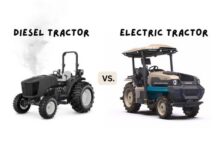
Cost has historically been the biggest barrier. Electric tractors today can cost two to two and a half times more than comparable diesel models, largely due to battery expenses and low production volumes. However, lithium ion battery prices have fallen by nearly 85 percent globally over the last decade, and further reductions are expected as domestic battery manufacturing scales under India’s advanced chemistry cell initiatives.
From a lifecycle perspective, electric tractors are increasingly compelling. Pilot studies suggest that electric tractors can deliver 30 to 40 percent lower total cost of ownership over six to eight years, driven by lower energy costs and significantly reduced maintenance. With diesel prices fluctuating between Rs 90 and Rs 100 per litre in many states, fuel savings alone can translate into tens of thousands of rupees annually for high usage operators.
Technology Advancements Addressing Farm Realities
Earlier electric tractor models were limited by low power output and short operating cycles. By 2026, newer models in the 40 to 60 horsepower range are entering pilot deployments, capable of delivering 6 to 8 hours of continuous field operation on a single charge. Battery swapping solutions and modular battery packs are also being tested to reduce downtime during peak agricultural seasons.
Charging infrastructure remains a challenge in rural India, but progress in feeder separation, solar powered charging stations, and on farm renewable energy integration is gradually improving feasibility, particularly for clustered farming regions.
New Business Models Accelerating Adoption
A critical catalyst for 2026 is the rise of tractor as a service and leasing models. Instead of owning high capex machinery, farmers can access electric tractors on a per hour or per acre basis. This approach dramatically reduces adoption risk while allowing service providers to maximise asset utilisation.
Industry estimates suggest that under a moderate adoption scenario, electric tractors could account for 5 to 7 percent of annual tractor sales by 2027, translating to over 60,000 units annually if momentum sustains.
Conclusion: An Inflection Point for Indian Agriculture
Electric tractors are not yet mainstream, but 2026 represents a clear inflection point. Policy clarity, tightening emission norms, falling battery costs, improving technology, and innovative ownership models are converging for the first time. While a full transition will take years, 2026 could be remembered as the year electric tractors moved from experimentation to execution in Indian agriculture, reshaping how farms operate in a more efficient, sustainable, and future ready way.