
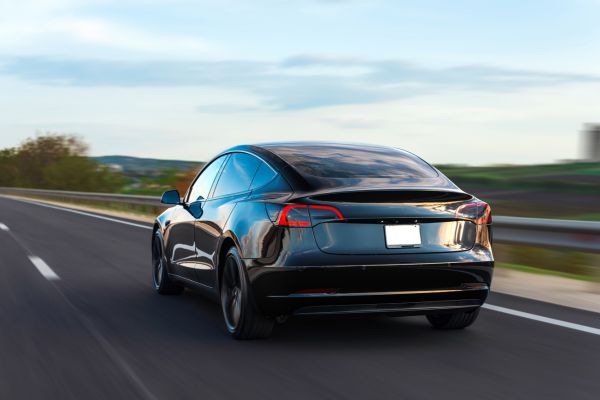
A modern car doesn’t just move you from one place to another. It listens, learns, communicates, and sometimes even decides. With autonomous and connected technologies, vehicles are no longer isolated machines—they are part of a vast digital ecosystem.
Cars today exchange information with traffic systems, nearby vehicles, cloud servers, and mobile devices. This connectivity brings real benefits: smoother traffic flow, fewer accidents, and a more personalized driving experience. But it also introduces a quiet, complex problem—cybersecurity.
The shift from mechanical engineering to software-driven mobility has changed the nature of risk. Earlier, safety meant airbags and seatbelts. Now, it also means firewalls, encryption, and secure code.
The Expanding Digital Surface of Vehicles
To understand the risk, you need to understand how deeply software is embedded in vehicles today. A connected or autonomous vehicle includes dozens of Electronic Control Units (ECUs), sensors, communication modules, and cloud interfaces.
These components interact through internal networks and external communication channels such as V2V (Vehicle-to-Vehicle), V2I (Vehicle-to-Infrastructure), and V2X (Vehicle-to-Everything). Each connection improves functionality—but also creates a possible entry point for attack.
Research consistently shows that as connectivity increases, so does system exposure. What was once a closed mechanical system is now an open, networked platform (Cybersecurity in Connected and Autonomous Vehicles: A Systematic Review of Automotive Security).
This expansion is not accidental. It is the foundation of autonomous mobility. But it requires a complete rethink of how safety is defined.
Data as the New Fuel and the New Risk
Every second, connected vehicles generate data. Not small amounts—massive streams. This includes:
- Real-time location and route history
- Driving patterns and behavior
- Biometric or user profile data
- Vehicle diagnostics and system status
This data powers intelligent systems. It helps improve navigation, optimize traffic, and even predict maintenance issues. But it also becomes a valuable target.
If compromised, this data can reveal personal routines, expose sensitive information, or enable tracking. More critically, manipulated data can affect how a vehicle behaves.
Security, therefore, is not just about protecting systems—it is about protecting decisions made by those systems (Cyber Security Issues in Connected Autonomous Vehicle).
Where the Threats Come From
Unlike traditional vehicles, cyber threats don’t require physical access. They can originate remotely and scale rapidly.
One of the most common risks is remote exploitation through wireless interfaces. Attackers can target Bluetooth, Wi-Fi, or cellular systems to gain initial access. Once inside, they may move laterally across the vehicle network.
Another concern is malware injection. Vehicles receive software updates and interact with external devices. If these channels are compromised, malicious code can be introduced.
Denial-of-Service attacks present a different kind of risk. Instead of taking control, they disrupt communication between systems. In a connected vehicle, delayed or blocked signals can have serious consequences.
Perhaps the most subtle threat comes from sensor manipulation. Autonomous vehicles rely on sensors to “see” the world. If attackers alter sensor input—through spoofing or interference—the vehicle may make incorrect decisions.
Studies have demonstrated that even minor disruptions in sensor data can lead to significant misjudgements in autonomous systems (Applied Sciences, 2023).
The Weak Link: In-Vehicle Communication Systems
Inside the vehicle, systems communicate through networks like the Controller Area Network (CAN). These were originally designed for efficiency, not security.
The assumption was simple: anything inside the vehicle could be trusted. That assumption no longer holds.
If an attacker gains access to one ECU, they may be able to send messages across the network. Without proper authentication, these messages can mimic legitimate commands.
This creates a dangerous possibility—control over critical functions such as braking, acceleration, or steering.
Research highlights that lack of segmentation and authentication within in-vehicle networks remains a major vulnerability (IEEE Automotive Security Study, 2022).
Autonomous Systems and the Problem of Trust
Autonomous vehicles introduce a new layer of complexity: decision-making driven by artificial intelligence.
These systems rely on machine learning models trained on large datasets. While powerful, they are not foolproof. They can be manipulated through adversarial inputs—subtle changes designed to confuse the model.
For example, altering a few pixels on a traffic sign can cause misclassification. A stop sign might be interpreted incorrectly, leading to unsafe behavior.
This shifts cybersecurity into a new domain. It is no longer just about protecting systems from intrusion, but also about protecting intelligence from deception (ScienceDirect Study on Intelligent Transport Systems).
Cloud Dependency and Systemic Risk
Connected vehicles depend heavily on cloud infrastructure. From navigation updates to AI model training, much of the processing happens outside the vehicle.
This creates efficiency but also concentration of risk.
If a cloud service is compromised, the impact can extend across thousands—or even millions—of vehicles. Similarly, insecure APIs or weak authentication mechanisms can expose sensitive data.
Edge computing helps reduce some of this risk by processing data locally. However, it introduces its own challenges in securing distributed systems.
Balancing performance, latency, and security remains one of the toughest problems in this space (Springer Journal on Vehicular Networks Security, 2023).
Industry Response
The automotive industry is gradually shifting from reactive security to proactive design.
“Security by design” is becoming a core principle. This means integrating cybersecurity measures at every stage of development—from hardware architecture to software deployment.
Manufacturers are adopting practices such as:
- End-to-end encryption of communication
- Secure boot mechanisms
- Intrusion detection systems
- Continuous vulnerability testing
There is also a growing focus on threat intelligence. Understanding attacker behavior helps organizations anticipate risks rather than just respond to them.
Industry reports emphasize that cybersecurity is no longer optional—it is a fundamental requirement for connected systems (Cisco Cyber Threat Trends Report).
OTA Updates
Over-the-Air (OTA) updates are one of the most powerful features of connected vehicles. They allow continuous improvement without physical intervention.
But this convenience comes with responsibility.
An insecure update mechanism can become a direct attack channel. If attackers manage to inject malicious updates, they could gain widespread control.
To prevent this, OTA systems must ensure authenticity, integrity, and confidentiality. This includes digital signatures, encryption, and strict validation protocols.
Research stresses that secure update frameworks are essential for long-term system resilience (SANDS Journal, 2023).
Privacy in the Age of Smart Mobility
Beyond technical security, privacy remains a key concern.
Connected vehicles collect deeply personal data. Without clear policies, this data can be misused by third parties.
Transparency becomes critical. Users need to know what data is collected, how it is used, and who can access it.
Regulations are beginning to address these concerns, but technology is evolving faster than policy. Bridging this gap will be essential for maintaining public trust.
Challenges That Remain
Despite progress, several challenges continue to shape the future of automotive cybersecurity.
One issue is standardization. Different manufacturers use different systems, making it difficult to implement universal security measures.
Another challenge is the supply chain. Modern vehicles rely on components from multiple vendors. Ensuring consistent security across this chain is complex.
There is also the issue of longevity. Vehicles remain in use for years, sometimes decades. Keeping them, secure over time requires continuous updates and monitoring.
Finally, the human factor cannot be ignored. Even the most secure systems can be compromised through poor practices or lack of awareness.
Conclusion
Autonomous and connected vehicles represent a major shift in how we think about mobility. They promise efficiency, safety, and convenience on a scale never seen before.
But these benefits depend on one critical factor: trust.
Without strong data security and in-vehicle cyber safety, that trust cannot exist. The challenge is not just technical—it is systemic, involving design, policy, and user awareness.
The future of mobility will not be defined only by how smart vehicles become, but by how securely they operate.