
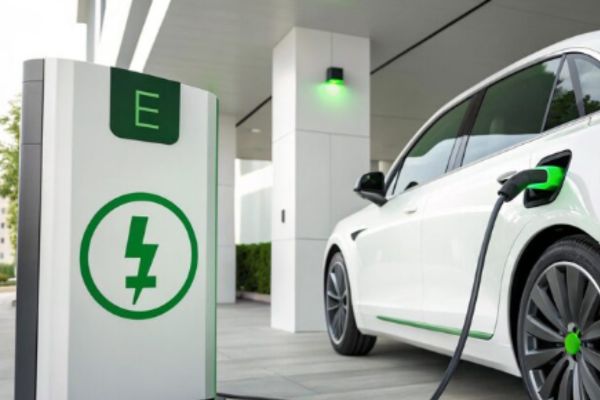
Electric vehicles (EVs) have rapidly evolved from being an environmentally friendly alternative to conventional automobiles into symbols of innovation, intelligent mobility, and futuristic design. While discussions around EVs often revolve around battery technology, charging infrastructure, and driving range, another transformation is quietly reshaping the automotive industry—the way vehicles are designed. Unlike traditional internal combustion engine (ICE) vehicles, electric vehicles provide designers with greater creative freedom. The absence of bulky engines, complex transmissions, and large exhaust systems has opened new possibilities in aesthetics, aerodynamics, interior architecture, and user experience.[1]
Today’s EV is no longer just a machine built to travel from one destination to another. It is increasingly becoming an intelligent, connected living space that reflects changing consumer lifestyles and expectations. Modern buyers seek vehicles that are visually appealing, technologically advanced, environmentally responsible, and comfortable enough to serve as mobile workspaces or entertainment hubs. As mobility continues to evolve through electrification, artificial intelligence, and autonomous driving, vehicle design itself is undergoing one of the biggest transformations in automotive history.[2]
The Design Revolution Begins
For over a century, automobile design was largely dictated by mechanical constraints. Large engines, transmission tunnels, fuel tanks, cooling systems, and exhaust layouts significantly influenced a vehicle’s proportions and styling. Designers had to work around these fixed engineering requirements.
Electric vehicles have fundamentally changed these limitations. Most EVs are built on dedicated skateboard platforms where the battery pack is integrated into the floor while electric motors occupy far less space than conventional engines. This new architecture allows designers to rethink everything—from the vehicle’s exterior proportions to cabin layout and passenger comfort.[3]
Without a front engine compartment occupying significant space, many EVs feature shorter overhangs, longer wheelbases, and spacious interiors despite maintaining similar exterior dimensions. This flexibility allows manufacturers to experiment with futuristic silhouettes, cleaner body lines, and more balanced vehicle proportions that were previously difficult to achieve.
Rather than simply replacing petrol engines with batteries, automakers are redesigning vehicles from the ground up, making design an essential component of the EV revolution.
Minimalism Meets Modern Luxury
One of the defining characteristics of future EV design is minimalism. Unlike conventional cars that often feature aggressive grilles, multiple air intakes, and intricate body details, electric vehicles embrace simplicity.
Since electric motors generate considerably less heat than combustion engines, EVs require much smaller cooling systems. As a result, many manufacturers have eliminated traditional front grilles or replaced them with sleek, closed-off panels. This creates a cleaner and more sophisticated appearance while also improving aerodynamic efficiency.[4]
Smooth body surfaces, uninterrupted character lines, flush door handles, hidden sensors, and frameless windows have become increasingly common. These elements contribute not only to visual elegance but also reduce air resistance, ultimately enhancing driving range.
This design language reflects a broader consumer preference for products that appear refined rather than overly complex. Similar trends can be observed in smartphones, consumer electronics, and modern architecture, where simplicity often communicates sophistication.
Research on consumer preferences has also shown that front-end styling significantly influences perceptions of modernity, innovation, and attractiveness in electric vehicles, highlighting the growing importance of aesthetic appeal alongside technical performance.[1]
Aerodynamics: Where Beauty Meets Efficiency
Unlike conventional vehicles where styling sometimes takes precedence over efficiency, every design decision in an EV has a measurable impact on performance. Aerodynamics has therefore become one of the most influential aspects of modern EV design.
Reducing aerodynamic drag directly improves battery efficiency, enabling vehicles to travel greater distances without increasing battery size. Consequently, designers now work closely with aerodynamic engineers from the earliest stages of vehicle development.[5]
Modern electric vehicles feature smoother rooflines, carefully sculpted side panels, active air vents, aerodynamic alloy wheels, and optimized rear sections that minimize turbulence. Even seemingly minor details—such as camera-based side mirrors, concealed windshield wipers, or specially designed wheel covers—can contribute to improved airflow.
Interestingly, these engineering improvements have also become visual signatures. Consumers increasingly associate sleek, streamlined forms with advanced technology and premium quality, making aerodynamics both a functional necessity and an aesthetic advantage.
Future EVs are expected to incorporate adaptive aerodynamic components capable of automatically adjusting according to speed, weather conditions, and driving requirements, further merging design with intelligent engineering.[6]
Lighting as a New Design Language
Lighting has become one of the most recognizable elements of electric vehicle identity.
Advancements in LED technology have allowed designers to transform headlights and taillights into distinctive brand signatures. Continuous light bars stretching across vehicle widths, animated welcome sequences, illuminated logos, and dynamic indicators have become common features across premium EVs.
Unlike conventional vehicles, where lighting primarily served functional purposes, modern EVs use lighting to establish emotional connections with users. Vehicles can greet drivers with customized lighting animations, communicate charging status, and even interact with pedestrians through visual cues.[7]
As autonomous driving technologies mature, lighting systems may evolve into communication tools that indicate vehicle intentions, improving safety while strengthening human-machine interaction.
These innovations demonstrate how lighting is transitioning from a supporting design feature into one of the primary visual identities of future mobility.
Sustainable Materials Redefining Luxury
Luxury in the automotive industry is no longer measured solely by leather upholstery or polished wood finishes. Increasingly, sustainability itself is becoming a hallmark of premium vehicle design.
Manufacturers are investing heavily in recycled plastics, reclaimed fabrics, natural fibres, bamboo, cork, vegan leather alternatives, and bio-based composites to reduce environmental impact without compromising comfort or aesthetics.[4]
Several automakers now produce interior components using recycled ocean plastics, discarded fishing nets, recycled PET bottles, and renewable textiles. These materials not only reduce waste but also demonstrate that environmentally responsible choices can coexist with premium craftsmanship.
Advances in material science have also enabled lightweight construction, which contributes directly to improved vehicle efficiency. By reducing overall weight, manufacturers can extend driving range while maintaining structural strength and passenger safety.
Rather than hiding these sustainable materials, designers increasingly celebrate them through exposed textures, natural finishes, and visible craftsmanship, creating interiors that communicate authenticity instead of excess.
Human-Centric Design Takes Centre Stage
Perhaps the most significant shift in EV design is the growing emphasis on the human experience.
Electric vehicles are being designed around occupants rather than mechanical systems. The flat battery floor enables spacious cabins with greater legroom, while redesigned seating layouts create more open and flexible interiors.[3]
Noise reduction also transforms the passenger experience. Electric powertrains operate much more quietly than conventional engines, allowing designers to prioritize acoustic comfort through improved insulation, carefully selected materials, and immersive audio systems.
Interior layouts are becoming increasingly intuitive. Physical buttons are gradually being replaced by digital interfaces, voice assistants, gesture controls, and intelligent software capable of adapting to individual user preferences.
Rather than overwhelming drivers with complexity, future EV cabins aim to simplify interaction by anticipating user needs, reducing distractions, and creating environments that feel calm, welcoming, and technologically sophisticated.
Software-Defined Interiors: Where Cars Become Digital Living Spaces
If the exterior of future EVs represents innovation, the interior represents transformation. Increasingly, vehicles are evolving into software-defined environments where digital intelligence shapes every interaction. Rather than being designed solely around driving, EV cabins are becoming adaptable spaces for working, relaxing, entertaining, and staying connected.[8]
The absence of a traditional transmission tunnel creates a flat cabin floor, allowing greater freedom in seating arrangements and storage solutions. Designers can introduce lounge-inspired layouts, floating centre consoles, rotating seats, and larger panoramic roofs that make the cabin feel significantly more spacious than conventional vehicles of similar dimensions.[3]
Large touchscreen displays have already become a defining feature of modern EVs, but future interfaces will move beyond screens alone. Artificial intelligence, augmented reality (AR), voice recognition, gesture controls, and head-up displays are expected to work together seamlessly, reducing the need for physical controls while making interactions safer and more intuitive.[8]
Instead of requiring drivers to navigate complex menus, vehicles will increasingly understand natural speech, recognize individual preferences, and automatically adjust climate settings, seating positions, ambient lighting, music playlists, and navigation routes. Every journey will become more personalized, transforming the vehicle into an extension of the user’s digital lifestyle.
Designing for the Age of Autonomous Mobility
Although fully autonomous vehicles are still under development, they are already influencing automotive design philosophies.
As vehicles gradually take over more driving responsibilities, cabin priorities will shift from driver-centric layouts to passenger-centric experiences. Steering wheels may become retractable, dashboards could transform into entertainment or productivity hubs, and seating configurations may become more flexible to encourage conversation or relaxation.[4]
Interior lighting will adapt to different activities such as reading, video conferencing, or resting. Intelligent climate systems may create personalized comfort zones for each occupant, while advanced sound management technologies will enable different passengers to enjoy separate audio experiences simultaneously.
Exterior design will also evolve to accommodate autonomous technologies. Cameras, LiDAR sensors, radar modules, and multiple perception systems must be integrated without compromising aesthetics. Rather than appearing as bulky attachments, these technologies are increasingly being embedded seamlessly into body panels, rooflines, and lighting elements.
Future vehicle design will therefore require a careful balance between technological functionality and visual elegance.
Sustainability Beyond Zero Emissions
While electric vehicles eliminate tailpipe emissions, true sustainability extends far beyond electrification. Designers and manufacturers are increasingly evaluating the environmental impact of every stage of a vehicle’s lifecycle—from raw material sourcing and manufacturing to recycling and end-of-life recovery.[4]
Circular design principles are becoming increasingly important. Components are now being engineered for easier repair, reuse, remanufacturing, and recycling. Battery packs, for example, are being designed with second-life applications in mind, allowing them to store renewable energy even after they are no longer suitable for automotive use.
Manufacturers are also adopting low-carbon production methods, renewable energy-powered factories, water-efficient manufacturing processes, and locally sourced materials to reduce their overall environmental footprint.
Consumers, particularly younger generations, are becoming more conscious of sustainability credentials. As a result, future vehicle design will increasingly reflect environmental responsibility not only through performance but also through material choices, manufacturing practices, and transparent supply chains.[6]
Sustainability is no longer an engineering objective alone—it has become an essential part of a vehicle’s identity.
Emotional Design Still Matters
Despite rapid technological advancements, purchasing decisions remain strongly influenced by emotion.
Research suggests that consumers continue to associate vehicle appearance with qualities such as innovation, safety, reliability, and premium value.[1] A visually appealing design often creates a positive first impression long before buyers evaluate specifications such as battery range or charging speed.
Manufacturers are therefore investing heavily in what designers describe as “emotional design”—creating vehicles that inspire confidence, excitement, and aspiration. Carefully sculpted body proportions, distinctive lighting signatures, elegant colour palettes, premium materials, and harmonious interior spaces all contribute to forming lasting emotional connections with users.
As EV technology becomes increasingly standardized across manufacturers, design and user experience will become major competitive differentiators.
The future automotive market may therefore be won not only by companies with the largest batteries or fastest charging systems, but also by those capable of creating vehicles that people genuinely enjoy owning and experiencing every day.
The Next Decade of EV Design
Looking ahead, several emerging trends are expected to shape the next generation of electric vehicles.
Artificial intelligence will increasingly support designers by optimizing aerodynamics, structural efficiency, and material usage during the design process itself. Digital twin technologies will allow manufacturers to simulate vehicle behaviour virtually before production begins, reducing development time and improving design accuracy.[8]
Advanced manufacturing methods such as large-scale 3D printing and generative design could enable lighter structures and highly customized components. Smart surfaces may replace traditional buttons, while adaptive materials capable of changing colour, texture, or transparency could redefine both interiors and exteriors.
Connected mobility ecosystems will also influence design decisions. Future EVs will communicate continuously with charging infrastructure, traffic management systems, smart cities, and other vehicles. As a result, designers must consider not only how vehicles look but also how they interact within broader mobility networks.
Perhaps most importantly, the distinction between automotive design, software engineering, architecture, and consumer electronics will continue to blur. Future EVs will increasingly resemble intelligent digital platforms wrapped in beautifully designed physical forms.
Conclusion
Electric vehicles represent far more than a shift from internal combustion engines to battery-powered mobility. They mark a fundamental redesign of what an automobile can be.
Freed from many of the mechanical constraints that shaped vehicle architecture for over a century, designers now have unprecedented opportunities to prioritize efficiency, sustainability, intelligence, and human experience. Minimalist exteriors, aerodynamic forms, software-defined interiors, sustainable materials, and AI-powered personalization are collectively redefining automotive aesthetics for the modern era.
As autonomous technologies, connected ecosystems, and circular manufacturing practices continue to mature, the vehicle of tomorrow will no longer be viewed simply as a mode of transport. It will become an adaptive, intelligent, and sustainable living space—capable of learning from its occupants while integrating seamlessly into increasingly connected cities.
Ultimately, the future of EV design lies not in creating cars that merely look futuristic, but in designing mobility experiences that are efficient, emotionally engaging, environmentally responsible, and centred around people. In this new era, aesthetics and engineering are no longer separate disciplines—they have become inseparable partners in shaping the future of mobility.


 have rapidly evolved from being an environmentally friendly alternative to conventional automobiles.)