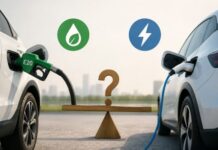

Luxury electric vehicles still form a small part of India’s overall car market, but they are no longer seen as outliers. Between January and May 2025, just over 2,000 units were sold, marking a 66 percent year-on-year increase, as reported by The Economic Times.
For a category that once struggled to move beyond early adopters, this growth matters less for its size and more for what it signals. Electric powertrains are now entering the consideration set of premium buyers who have traditionally focused on performance, brand legacy, and long term usability. This shift is happening alongside tighter emission scrutiny, uneven incentive structures, and continued demand for large luxury vehicles creating a complex backdrop as the industry moves toward 2026.
In the luxury electric vehicle segment, tax policy and incentives have played a larger role than regulation in shaping buyer response. When Maharashtra rolled back its proposal to levy a 6 percent tax on electric vehicles priced above USD 35,000 in March 2025, as reported by Reuters, it reinforced a familiar pattern. Luxury buyers react quickly to fiscal signals, and just as quickly to uncertainty. For them, confidence in how rules will hold over time often matters as much as the promise of cleaner technology, especially when resale value and long-term ownership remain key considerations.
At the same time, tighter emission requirements are beginning to narrow the margin for manufacturers with portfolios dominated by large, fuel intensive vehicles. India has not moved toward blanket restrictions, but upcoming compliance thresholds are well understood across OEM planning teams. This is already visible in how companies are sequencing investments, managing model lifecycles, and timing platform upgrades. In the premium segment, some launches have been delayed, certain variants quietly phased out, and electrified versions prioritised, partly because higher price points allow more flexibility in absorbing costs.
As these forces converge heading into 2026, the luxury automotive market is entering a more disciplined phase. Policy signals, technology choices, and buyer expectations are no longer evolving in isolation. Instead, they are beginning to influence each other more directly, shaping how vehicles are developed, priced, and positioned across the market.
Luxury buyers themselves are becoming more selective in how they evaluate vehicles. Brand image and performance still matter, but purchase conversations now routinely include running costs, regulatory certainty, and how well a vehicle is likely to hold value over a typical ownership cycle. This has not reduced demand for luxury, but it has changed what buyers expect in return. Cabin comfort, software reliability, charging convenience, and after sales support are increasingly weighed alongside design, power output, and badge value.
As new luxury electric vehicles continue to be priced at the upper end of the market, many buyers are looking for ways to balance aspiration with value. This has accelerated interest in the pre owned luxury segment, where certified vehicles offer lower entry points without compromising on brand or experience.
The pre owned channel now accounts for a larger share of premium transactions than it did just a few years ago. India’s used car market was valued at approximately USD 36.39 billion in 2025 and is projected to grow at close to 15 percent annually through 2030, according to GII Research. Luxury vehicles make up a noticeable portion of these volumes. Electric models, in particular, tend to enter the market at higher price points than comparable combustion vehicles, making certified preowned options more relevant for a wider buyer base.
Charging access continues to vary significantly between cities and regions, depending on local infrastructure and rollout pace. Incentive structures also remain inconsistent across states and policy cycles. In this environment, certified pre-owned vehicles help facilitate premium transactions at more accessible price points, while keeping vehicles in circulation for longer across multiple ownership cycles.
As a result, brand performance is no longer judged only by retail sales numbers. Residual values, resale outcomes, and service coverage are now tracked closely alongside electrification plans. These factors become clearer over longer ownership periods and influence both new vehicle demand and secondary market valuations.
By 2026, success in the luxury automotive market will depend less on how quickly brands expand and more on how consistently they execute. Manufacturers, dealer groups, and resale platforms that align portfolio planning, service readiness, and residual value management will be better positioned to navigate tighter regulations and evolving buyer expectations. Those that treat electrification, policy compliance, and the preowned market as connected parts of the same system rather than separate challenges will be the ones that build long term trust, stable demand, and sustainable growth.