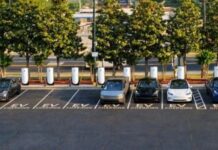

Mahindra has kicked off its much-anticipated ultra-fast EV charging initiative under the banner Charge_IN, deploying 180 kW chargers as part of a long-term plan to install 1,000 high-speed charging points nationwide by the end of 2027.
The first two Charge_IN stations are already live — one at Hoskote on the Bengaluru–Chennai (NH-75) highway and the other at Murthal on NH-44, about 50 km from Delhi. Each station is equipped with dual-gun 180 kW chargers, capable of serving up to four electric vehicles simultaneously.
Mahindra says these ultra-fast chargers will support its upcoming electric SUV lineup — including models like XEV 9e, BE 6 and the forthcoming XEV 9S — enabling a 20–80% charge in roughly 20 minutes under ideal conditions. This rapid top-up capability aims to make long-distance EV travel far more practical and stress-free.
In a move toward inclusivity and broad EV adoption, the Charge_IN network will be open not just to Mahindra vehicles. Owners of any compatible EV brand can use these chargers via the “Charge_IN by Mahindra” app or other major EV-charging aggregator platforms. Mahindra’s existing “Me4U” app will also list these stations and allow booking, payment, and navigation — further simplifying access.
Strategically, Mahindra plans to position these charging stations along major highways and high-traffic corridors, often co-located with amenities such as cafés and restaurants. That way, EV users can recharge their vehicles conveniently while taking a break — a thoughtful approach aimed at reducing travel friction and boosting comfort on long journeys.
Overall, the Charge_IN rollout signals Mahindra’s bold commitment to building India’s EV charging infrastructure at scale — a necessary backbone if electric mobility is to become mainstream. By combining high-speed charging with wide accessibility and convenience, this initiative could help overcome one of the biggest hurdles to EV adoption in India: range anxiety and charging infrastructure shortage.